


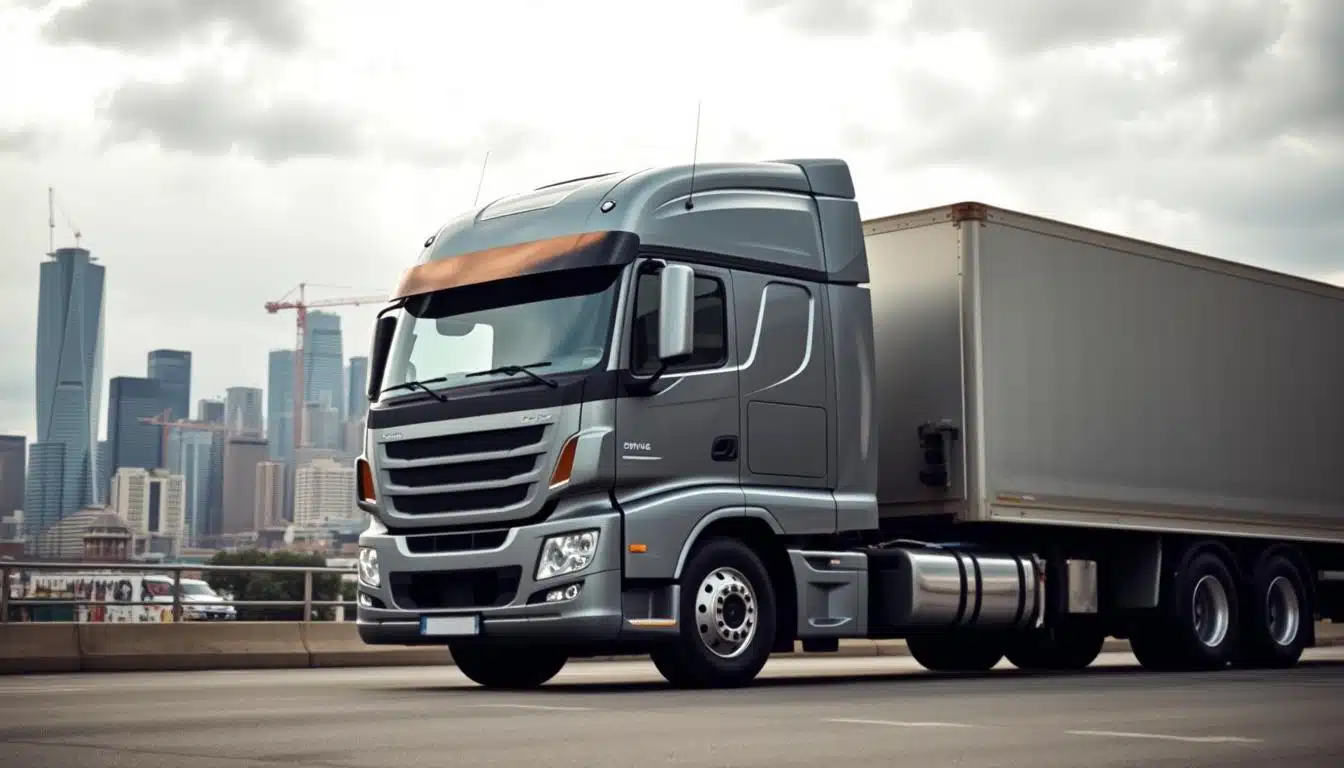
Operating a commercial truck is a vital part of the American economy. With over 3.5 million drivers and more than 711,000 trucking businesses, the industry is vast. Yet, it also carries significant risk, with over half a million truck-related crashes reported annually.
Securing the right protection for your vehicle and business is not just a good idea—it’s essential. This guide is designed to help you navigate the complex world of commercial truck insurance. You will learn the critical steps for evaluating different providers.
We will break down the essential criteria, from coverage options and pricing to customer service. Whether you are an owner-operator with a single truck or manage a large fleet, this resource is for you. Our goal is to equip you with the knowledge to make a confident, informed choice.
By the end, you will understand how to identify a partner that fits your specific business model and budget. Making this decision requires careful analysis, and we are here to streamline that process for you.
Key Takeaways
- The trucking industry involves significant risk, making proper coverage a necessity.
- Evaluating providers requires looking at more than just the premium cost.
- Coverage options and policy details can vary greatly between companies.
- The claims handling process is a critical factor in choosing an insurer.
- Your specific business size and operational needs should guide your selection.
- Industry data and expert insights can simplify the comparison process.
Introduction to Commercial Truck Insurance
Transporting goods across the nation relies heavily on the commercial trucking industry’s extensive network. This vital sector requires specialized protection tailored to its unique operational challenges.
Why Truck Insurance is Essential
Commercial vehicle coverage serves as your primary financial safeguard. It protects against significant risks encountered during daily operations.
The industry faces substantial exposure to incidents. Over 500,000 truck-related crashes occur annually in the United States. This underscores the absolute necessity of comprehensive protection.
Unlike standard personal auto policies, commercial coverage addresses unique liability exposures. These include damage to high-value cargo and third-party injuries.
| Risk Factor | Industry Impact | Protection Need |
|---|---|---|
| Extended operating hours | Increased accident probability | 24/7 liability coverage |
| Heavy loads and cargo | Higher damage costs | Enhanced physical damage protection |
| Diverse weather conditions | Operational challenges nationwide | Comprehensive weather-related coverage |
| Regulatory requirements | Legal compliance necessities | Policy meeting state and federal standards |
Market Overview and Risks for Truckers
Your business joins more than 711,000 trucking enterprises nationwide. These operations depend on specialized insurance products for sustainability.
Alarmingly, over 29% of small businesses operate without adequate coverage. This exposes them to potentially devastating financial consequences.
Understanding the essential role of proper coverage forms the foundation for long-term business success. It ensures compliance while protecting your assets.
Understanding Essential Coverage Options
Your financial security on the road hinges on a combination of mandatory and highly recommended policies. Knowing what each one protects is the first step toward building a solid safety net for your business.
Liability, Physical Damage, and Cargo Coverage
Liability coverage forms the bedrock of your policy. It handles costs if you accidentally injure someone or damage their property. This essential protection also covers your legal defense if a lawsuit arises from an accident.
In contrast, physical damage coverage safeguards your own tractor and trailer. It pays for repairs from collisions, theft, or weather events. This policy protects your most valuable business assets.
Cargo insurance is vital for the goods you transport. It provides reimbursement if the freight is stolen, damaged, or destroyed while in your care.
Additional Policies: Workers’ Compensation and Excess Liability
Most states require workers’ compensation if you have employees. This policy covers medical bills and lost wages for work-related injuries or illnesses. It is a critical layer of protection for your team.
For severe incidents, commercial excess liability offers an extra safety net. Also called umbrella coverage, it activates when a claim exceeds your primary policy limits. This is crucial given that serious accidents can result in massive costs.
State minimum requirements vary significantly. For example, California mandates coverage from $300,000 for household goods to $5 million for hazardous materials.
Understanding these fundamental coverage options allows you to create a program that meets regulatory demands and shields your enterprise from financial disaster.
Evaluating Top Truck Insurance Providers for 2025
The 2025 insurance landscape presents several standout companies offering specialized coverage for trucking operations. Each provider brings unique strengths to address different business needs.
Highlights of the Best Commercial Truck Insurance Companies
Progressive stands out as a top choice with customizable policies dating back to 1937. Their A+ ratings from AM Best and BBB demonstrate strong financial stability.
OOIDA excels for small businesses through fast in-house underwriting. This company actively advocates for customers within the trucking community.
The Hartford serves large fleets with specialized risk management programs. Their 200-plus-year history brings extensive industry experience.
| Company | Best For | Key Features | Financial Rating |
|---|---|---|---|
| Progressive | Overall Coverage | Customizable policies, extensive discounts | A+ (AM Best) |
| OOIDA | Small Companies | Fast underwriting, customer advocacy | A+ (BBB) |
| The Hartford | Large Fleets | FleetAhead program, multiple discounts | Excellent ratings |
| CoverWallet | Value Comparison | Online quote aggregation, bad credit options | Multiple carriers |
| Lancer | Customer Service | 24/7 claims, low complaint volume | A- (AM Best) |
| Evolution | High Risk | Specialized hazardous cargo coverage | Lloyd’s of London |
Pros and Cons of Leading Carriers
Each insurance company has distinct advantages. Progressive offers broad customization while OOIDA provides personalized service for smaller operations.
Some carriers specialize in challenging scenarios. Evolution handles high-risk cases that other companies might decline.
Consider your specific needs when evaluating these options. The right partner should match your operational profile and risk factors.
How to Compare Truck Insurance Providers
Finding the right commercial vehicle coverage requires more than just comparing premium prices. You need a structured methodology that evaluates multiple factors objectively.
This approach ensures your decision relies on quantifiable data rather than marketing claims. It transforms a complex process into a clear, systematic evaluation.
Key Comparison Criteria and Methodology
A comprehensive assessment examines several critical dimensions. These include financial stability, complaint history, and available coverage options.

Financial strength ratings from agencies like AM Best reveal an insurer’s ability to pay claims. Ratings of A- or higher indicate superior security for your business.
Customer complaint ratios provide crucial insight into service quality. State insurance departments compile this data through the National Association of Insurance Commissioners.
Our evaluation analyzed 12 commercial trucking insurance carriers. We examined nearly 72,000 consumer sentiments and complaint data.
The methodology weighted formal complaint data at approximately 95% of the score. Consumer sentiment analysis accounted for the remaining 5%.
This balanced approach combines hard data with real-world customer experiences. It helps identify carriers that offer both competitive pricing and reliable service.
Analyzing Customer Service and Claims Processes
When an accident occurs, your insurance company’s response becomes your most critical business lifeline. The efficiency of their claims handling and quality of customer service often outweigh initial premium savings.
This evaluation examines how different carriers support you during stressful situations. It reveals which companies truly prioritize policyholder experience.
24/7 Support and Claims Handling
Continuous operations demand around-the-clock assistance. Lancer Insurance provides 24/7/365 claims reporting with in-house handling for faster resolution.
Progressive offers tech-driven support available at all hours. The Hartford complements its coverage with risk engineering services.
Immediate claims initiation prevents operational delays. This service ensures help arrives when incidents happen during night routes or weekend hauls.
Customer Satisfaction and Feedback
State insurance departments track formal complaint ratios. These objective measures show how frequently policyholders encounter severe issues.
Lancer maintains complaint volumes well below national averages. State Farm ranks highly for physical availability through local agents nationwide.
Consumer sentiment analysis examines thousands of online reviews. This reveals satisfaction patterns beyond official statistics.
While some carriers receive mixed feedback, consistent performers demonstrate superior commitment. Your research should combine BBB ratings, complaint data, and testimonials from similar operations.
Key Factors Affecting Truck Insurance Costs
Your commercial vehicle insurance premiums are shaped by multiple risk factors that insurers carefully evaluate. Understanding these elements helps you anticipate costs and make strategic coverage decisions.
Monthly premiums average $650 for transport operations and $1,000 for specialty haulers. Your actual rates depend on specific risk assessments.
Truck Value, Cargo Type, and Coverage Limits
The value and size of your vehicle directly impact physical damage coverage costs. Newer, expensive trucks require higher premiums for adequate protection.
Cargo characteristics significantly influence your insurance expenses. High-value goods and hazardous materials present elevated risk exposure. Insurers price this into your premiums.
Your selected coverage types and policy limits create substantial cost variations. Higher liability limits and comprehensive protection increase premiums but provide greater financial security.
Driver History and Operational Details
Driver records represent a critical cost factor. Insurers examine commercial driving experience, violation history, and previous claims. Clean records typically result in lower rates.
Your operating radius profoundly affects pricing. Long-haul routes spanning multiple states command higher premiums than local delivery patterns. Location also plays a key role in determining costs.
| Factor Category | Specific Element | Premium Impact | Risk Level |
|---|---|---|---|
| Vehicle Characteristics | New tractor-trailer vs. older box truck | High ($15,200-$17,200 annually) | Elevated |
| Cargo Type | Hazardous materials vs. standard freight | Significant increase | High |
| Coverage Selection | Comprehensive vs. basic liability | 30-50% difference | Customized |
| Driver Profile | Clean record vs. violations history | 20-40% variance | Variable |
| Operational Scope | National routes vs. local delivery | 15-30% higher | Increased |
Additional Coverage and Discount Opportunities
Savvy business owners recognize that premium savings and expanded protection often come from exploring specialized coverage alternatives. These programs reward safe operations while addressing unique operational needs.
Custom Coverage Options for Unique Needs
Beyond standard packages, several specialized coverage options exist for specific scenarios. These types of protection fill critical gaps in conventional policies.
Non-trucking liability protects leased operators during personal vehicle use. Hired auto coverage extends to borrowed or rented vehicles not on your primary policy.
| Coverage Type | Best For | Key Protection |
|---|---|---|
| Occupational Accident | Independent contractors | Medical, disability, death benefits |
| Trailer Interchange | Hauling others’ trailers | Damage to non-owned equipment |
| Emergency Towing | All operations | Roadside assistance costs |
| Custom Policies | Unique business models | Tailored risk management |
Discount Programs for Fleet and Safe Driving
Progressive’s Smart Haul Program offers 12%+ savings for companies sharing Electronic Logging Device data. Their Snapshot ProView tools provide 8-20% discounts through fleet management technology.
Direct Auto Insurance gives up to 15% off for fleets with 20 vehicles. Safe driving records and proven skills also qualify your drivers for additional savings.
These discount opportunities make comprehensive protection more affordable while encouraging safer operations.
Choosing the Right Provider for Your Business
The final step in securing your commercial operation involves aligning your specific hauling requirements with an insurance partner that truly understands your industry segment. This decision impacts your financial security and regulatory compliance.
Matching Coverage to Your Business Needs
Your hauling specialty determines which insurance companies best serve your business. Agricultural, refrigerated goods, and hazardous materials operations each have unique coverage needs.
Independent owner-operators face different considerations than fleet managers. Single-truck operations require providers who understand their distinct challenges.
State-specific requirements create compliance obligations your chosen insurance company must address. Working with independent agents provides access to multiple policy options.
| Business Type | Special Considerations | Recommended Approach |
|---|---|---|
| Owner-Operator | Single vehicle risk | Specialized small business providers |
| Fleet Operations | Multi-vehicle coordination | Comprehensive fleet programs |
| Hazardous Materials | Elevated liability exposure | Specialized carriers |
| Refrigerated Goods | Cargo temperature protection | Enhanced cargo coverage |
Strategic purchasing may involve securing different coverage types from multiple specialized carriers. Alternatively, bundling policies with one company often yields significant discounts.
Your final selection should balance premium affordability with coverage adequacy. Choose partners with proven expertise in your specific trucking segment.
Conclusion
Your commercial transportation enterprise requires a strategic approach to risk management through proper insurance selection. The commercial trucking industry faces significant exposure, with over 500,000 annual accidents underscoring the necessity of comprehensive protection.
Effective evaluation considers multiple factors beyond just premium costs. Financial stability, customer service quality, and specialized expertise in commercial auto coverage all contribute to finding the right partner for your specific needs.
Leading providers offer distinct advantages tailored to different business models. From small operations to large fleets, matching your requirements with appropriate policies creates a solid foundation for sustainable growth.
Strategic use of available discounts and proper coverage selection can optimize your insurance investment while ensuring adequate protection against liability and other risks.
